
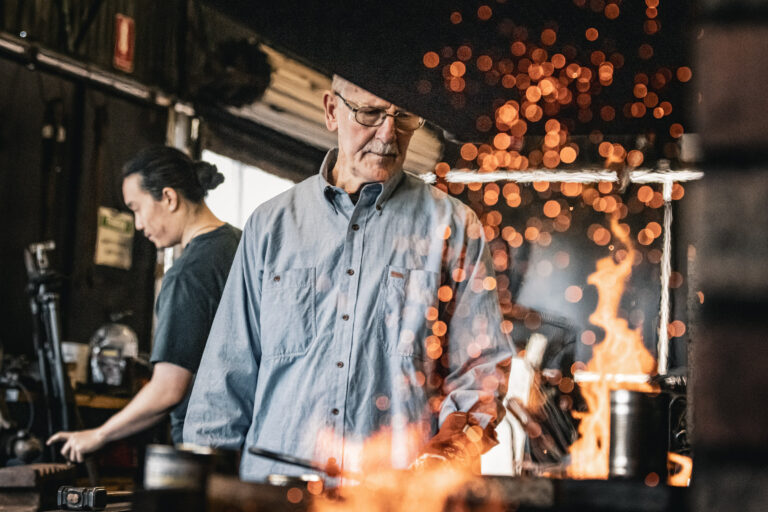
There is something almost hypnotic about watching a blacksmith at work.
Metal disappears into the heat of the forge before emerging glowing orange. There is only a short window to work with it before it cools, and with each strike of the hammer it slowly begins to take on a new shape.
It was the visual side of blacksmithing that first made me think there might be a story worth exploring. The fire, the sparks and the physical nature of working metal seemed made for photography.
But after spending time with members of the Blacksmiths Association of Western Australia at their Claremont Showground workshop, it became apparent that there was much more to the story than what was happening at the anvil.
The Association brings together people with a shared interest in keeping the skills of traditional blacksmithing alive, while providing a place for those who want to learn, experiment and simply enjoy making things with their hands.
For Association chairman Michael Koh, preserving those skills and passing them on is an important part of what the group is about.
The Association has roots stretching back to the 1970s, but spend some time around its workshop today and it quickly becomes apparent that there is no single type of person who becomes a blacksmith, nor one particular path that brings them to the forge.
It became apparent that there was much more to the story than what was happening at the anvil.
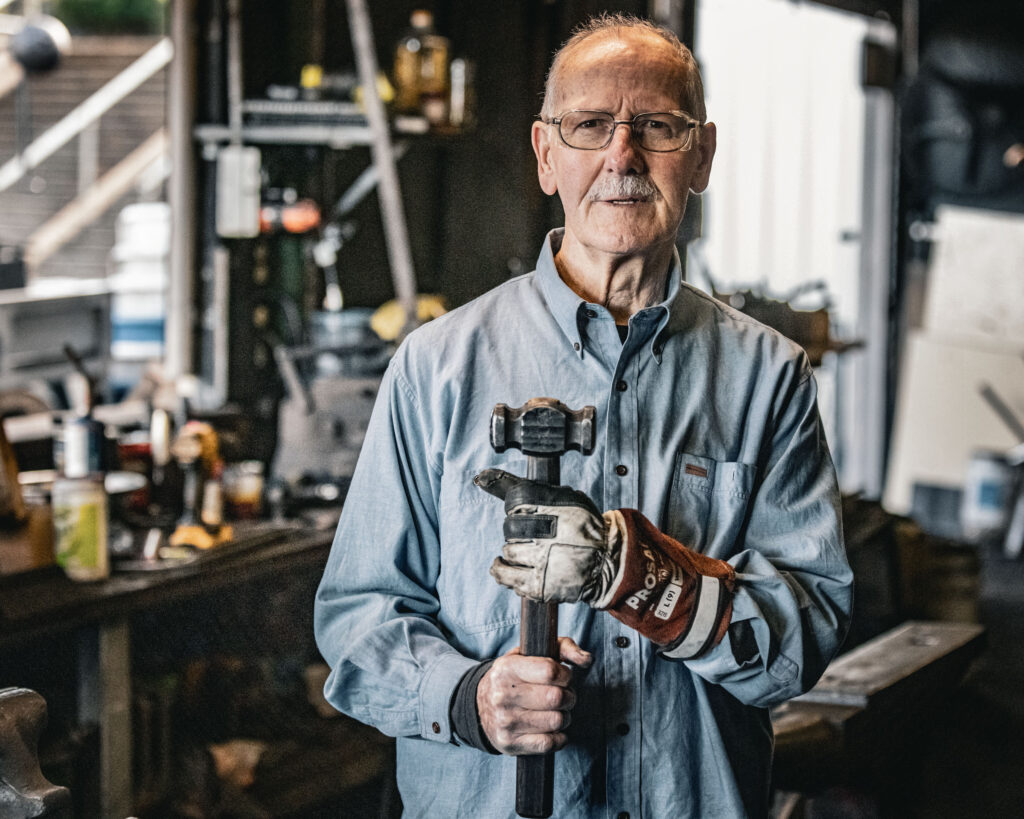
Different paths to the anvil
Some members have come to blacksmithing through an existing interest in making things.
A number have tried their hands at other crafts, including woodworking, before becoming interested in what they could create with metal. Some enjoy the independence and satisfaction of being able to make their own tools, while others are drawn to the creative possibilities of taking a raw material and turning it into something of their own.
Members work with materials including steel, copper and brass, producing everything from practical objects and handmade tools to decorative and artistic pieces.
For Chris, taking up blacksmithing provided a connection to a much earlier part of his life.
He had pursued woodworking as a hobby, but his interest in blacksmithing reached back to his younger years. Growing up with a grandfather who worked as a farrier meant the craft already held a personal connection.
Years later, finding his way to the Association offered Chris an opportunity to reconnect with that world, this time picking up the hammer himself.
For Daryl, the attraction comes from somewhere different again.
Part of the satisfaction is creating something for another person. But for him, the real reward comes at the end of the process, when something that began as a piece of metal is finally placed into the hands of the person he made it for.
Seeing the reaction on someone’s face when they are presented with something made especially for them is, for Daryl, where much of the magic lies.
It is a simple sentiment, but one that goes some way towards explaining the continued attraction of making something by hand in a world where almost anything can be bought ready-made.
And while people like Chris and Daryl have each found their own reasons for coming to the forge, you don’t need any previous experience to discover what yours might be.
More than keeping an old craft alive
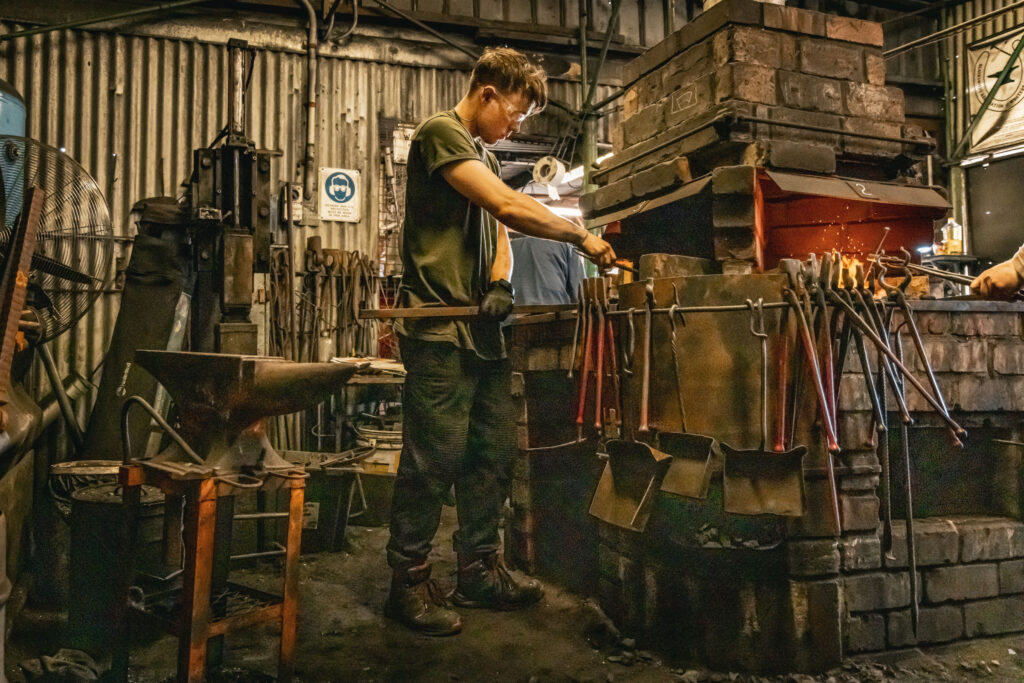
Despite the history and skill associated with blacksmithing, the Association isn’t a closed workshop reserved for experienced blacksmiths. Beginner courses provide a way into the craft, while the workshop gives members somewhere to continue learning alongside those with more experience.
On any given day, experienced hands might be working alongside someone still developing their skills, with techniques passed between members and ideas exchanged as individual projects gradually take shape.
But not every moment is spent standing over an anvil.
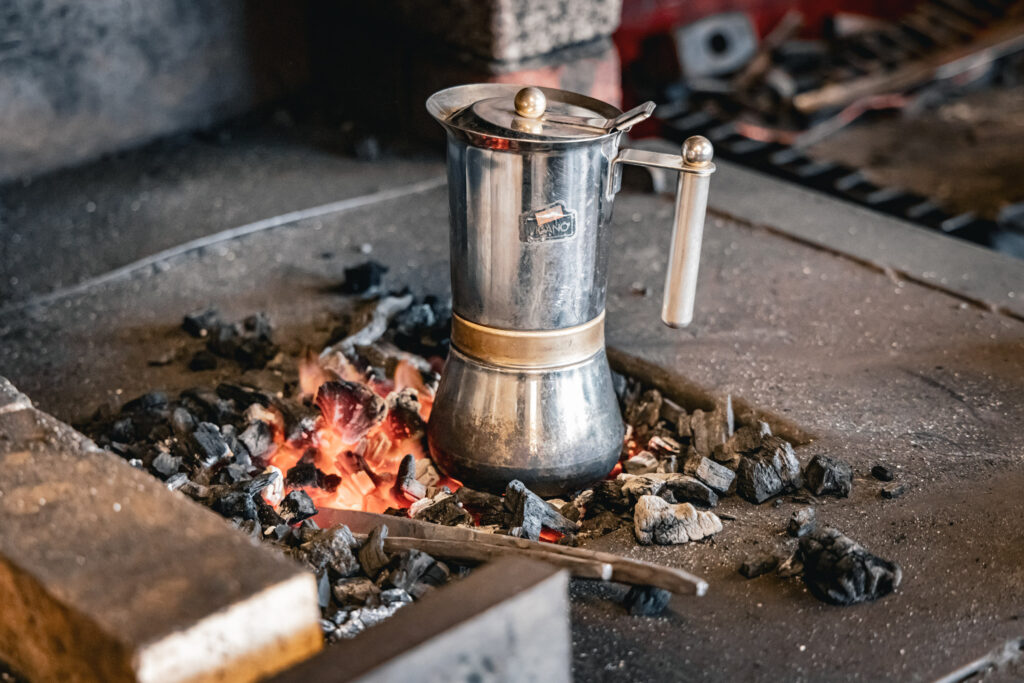
There is time for a chat, to see what somebody else is making or exchange ideas between projects. And when it’s time for coffee, even the espresso maker finds its way onto the fire.
It’s a small detail, but one that says something about what has grown around the craft.
People may arrive because they want to learn a skill or make something with their hands, but along the way they become part of a community built around creating and sharing knowledge.
That sharing also extends beyond the workshop. Through demonstrations such as those at the Perth Royal Show, members put blacksmithing in front of people who may never have stood beside a working forge before.
Perhaps among those watching will be someone who decides they’d like to have a go themselves.
Blacksmithing carries centuries of history with it, but the reasons people are still drawn to the forge today are surprisingly varied.
For some, it’s about connection, whether to family, tradition or the community around the workshop. For others, it’s about creativity, taking a raw piece of metal and turning it into something that didn’t exist before. And sometimes it’s simply practical, learning the skills to make something yourself rather than buying it.
Whatever brings someone to the anvil, what I found at the Blacksmiths Association of Western Australia wasn’t simply a group preserving an old trade.
It was a group of people continuing to practise it, teach it and find their own reasons for keeping it relevant.
The fire and sparks might have been what first suggested there was a photograph to make.
The people around the forge were where I found the story
Through the Lens
Through the Lens is an ongoing series sharing the stories behind my photography. Sometimes it is the story within an image, sometimes the story behind it. Either way, it is about looking a little closer at the people, places and moments captured through my lens.